
 ThoughtboxSign in
It becomes a book.
Your photographs were already telling a story. A monograph is that story as a printed object. You plan it. You correct it. It arrives bound and delivered.
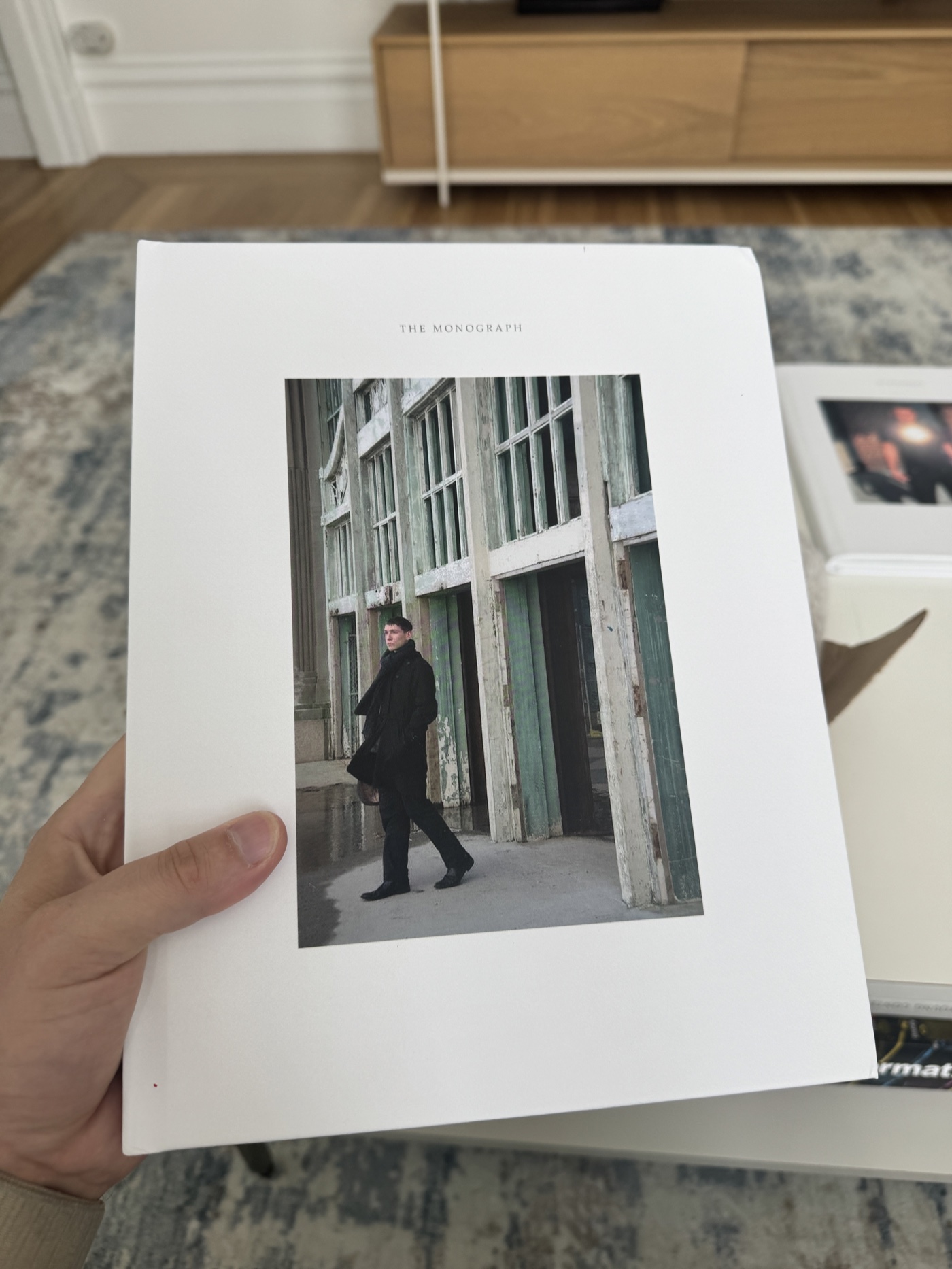
Most software treats a book as an export: a folder of pictures poured into a template, one photograph to a page, in whatever order they were taken. That is a slideshow with a spine. A monograph is edited. It argues something about a life, it cites the photographs that support the argument, and it leaves out the ones that don’t.
Six movements. Every one of them stops and waits for a decision that is yours.
- One
It reads what you have written
Not the pixels alone. The captions you wrote, the pairs you made, the answers you gave — your own words carry more weight than anything the machine inferred from a photograph.
- Two
It proposes a thesis
Before a single page is composed, the Reader tells you what it believes the book is about, and why. You accept it, or you don't. Nothing is written against a thesis you refused.
- Three
You plan it together
The chapters arrive as a plan — which threads, in which order, at what length. It is a proposal, not a fait accompli. Chapters can be cut, retitled, and rewritten before anything is set.
- Four
It composes the pages
Photographs are chosen and placed against the words, on device, at print resolution. Pairs stay whole: a diptych is one work and prints as one frame, never two cropped squares.
- Five
You correct it
Every machine sentence takes your pen. Swap a plate, replace a pair, rewrite a paragraph in your own voice — and the correction is kept, so the next book already knows.
- Six
It is printed and delivered
You approve a proof of the exact file that goes to press, and the press refuses anything that doesn't match the book you approved. Then it is made, and it arrives.
Chapters, each carrying its own plates. Your writing, printed as you wrote it. The pairs you made, kept whole. A contents page, a dedication if you want one, and a colophon that says plainly how many of your own writings the book was composed from — because a book about a life should be honest about the evidence it stands on.
Nothing appears that you have not seen. There is no page you meet for the first time when the parcel arrives.
Printed to order and posted to you. Pricing arrives with the App Store release.
It is not an export. Your archive can be exported — everything you have written, in one action, whenever you want it, and that matters. But the book is not that file with a cover on it. It is an edited work, and the editing is the product.
It is not a web page. A monograph is never published to a link, and there is no online edition to open. Individual pieces can be shared if you choose to share them. The book is made as one printed artifact and stays one: something you hold, shelve, and hand to a person.
“I knew these moments happened. I didn’t realize this was the story they were telling.”
The sentence every monograph is built to earn.